Books
Forests For The People

This Grand & Magnificent Place

Young People and Nature
In 1984, Professor Edward O. Wilson of Harvard published his book Biophilia: The Human Bond with Other Species. The book presented a truly radical idea—that humanity has a natural tendency to seek out and make connections with the animals and plants of the natural world.
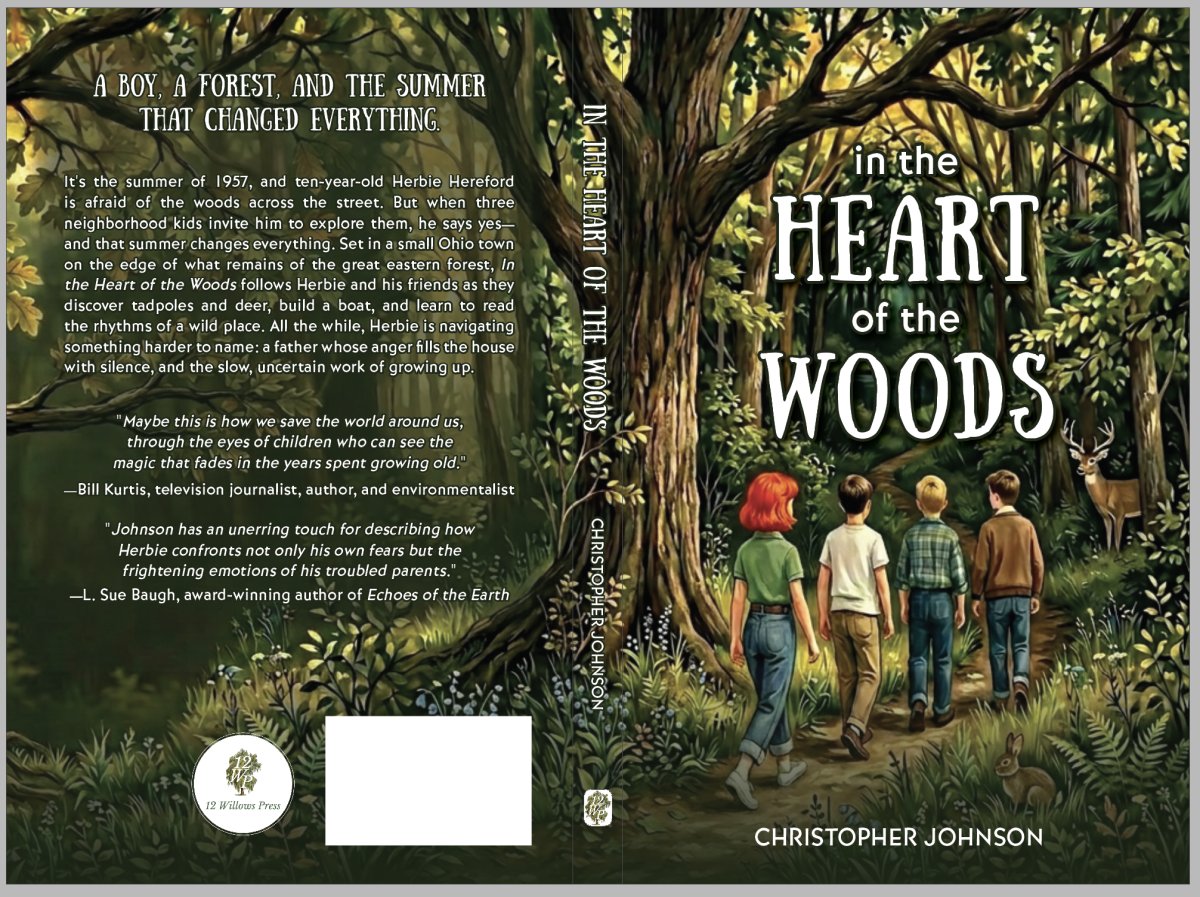
In my novel, In the Heart of the Woods, I have sought to dramatize how young people demonstrate and exemplify the connections between young people and the natural world. The novel presents the positive side of a coin that, when flipped over, underscores the crisis the confronts childhood in American today. For, as Richard Louv spelled out so comprehensively in his book Last Child in the Woods: Saving Our Children from Nature-Deficit Disorder, too many children grow up separated from nature—a condition that Louv calls “nature-deficit disorder.” Accordingly, I would like to spell out several ways in which experiences with nature are essential to children’s intellectual, emotional, and physical development.
- Promote independent problem solving. Children in the outdoors confront various problems and must gain practice in solving them independently. For example, I remember the first time our family went camping, back in the 1980s, and our children helped put up the tent and build a campfire. They helped solve the problems in doing both of these tasks.
- Overcome obstacles and build persistence. For example, on hikes in the woods, children have to overcome obstacles such as facing a tree that has fallen across a trail or figuring out how to cross a shallow creek. Nature presents dozens of such obstacles that given children practice in thinking for themselves.
- Develop strength and agility. Whether they are hiking, climbing, or just playing, children develop their muscles, burn calories, and develop their agility and balance. These experiences build habits that will help children remain physically fit into adulthood.
- Learn to observe. When children are in the outdoors, they learn to stop, to observe, to pay attention. When I was a high-school English teacher, I would sometimes take kids outside for a writing exercise in which they would observe a leaf, an insect, or a tree for 10 to 15 minutes and then write what they observed. They were always amazing at the details that they had observed.
- Learn to cooperate. Nature brings out the naturalcooperative tendencies in children. Whether they are working together to build a fort or climb a tree, they are learning teamwork. When the first Earth Day was celebrated on April 22, 1970, I was teaching junior high,and we organized the kids into teams to clean up a stream in back of the school that was loaded with shopping carts and other detritus. I was very impressed with the kids’ cooperation as they tackled the cleanup.
- Develop creativity and imagination. As children play in the outdoors and in nature, they can take on imaginative roles, observe and interpret the clouds in the sky, and tap unknown creative powers such as painting and writing. /they can make up songs and poems about the outdoors. The possibility for creative expression are endless.
- Learn to be responsible for theenvironment. As children observe and interact with animals and plants in nature, they learn to value other forms of being and naturally learn the value of all forms of life—and that those forms of life and their habitats are worthy of being protected.
- Learn confidence. Kids learn empowerment from being outdoors in the natural world. Nature is unpredictable, and kids have to overcome obstacles and problems, and they learn to be more creative. In developing all these qualities, children learn to rely on themselves, and they gain a sense of agency that will be invaluable as they move into adulthood.